2026-10-23 · Dale Harlan
How To Choose The Right Dumpster Size For Oklahoma City Projects
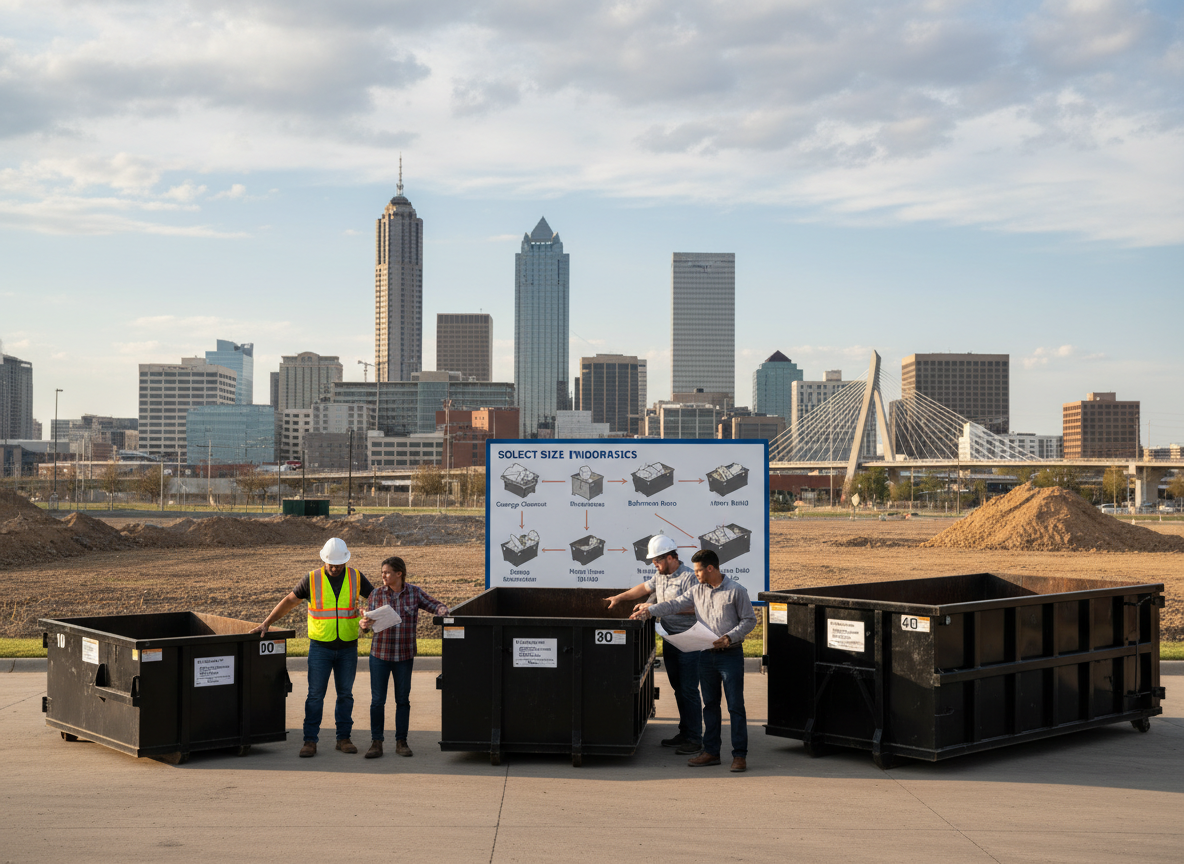
For most Oklahoma City projects, a 10- to 20-yard dumpster handles typical residential cleanouts and renovations, while 30- to 40-yard containers suit bigger commercial builds or storm debris removal. The exact size depends on waste volume, material type, and site constraints in areas such as Bricktown, Midtown, and The Village.
Matching Dumpster Sizes to Common Oklahoma City Projects
Homeowners in Midtown and Automobile Alley often tackle kitchen or bathroom remodels that generate 4 to 8 pickup-truck loads of drywall, cabinets, and fixtures. A 10-yard dumpster fits these jobs without wasting space on a larger unit that may not fit narrow driveways. Larger whole-house renovations in Capitol Hill or Deep Deuce can produce 12 to 18 loads, making a 20-yard container the practical choice. Commercial work near the Oklahoma State Capitol or National Cowboy & Western Heritage Museum frequently requires 30-yard units for concrete, metal, and packaging. Stockyards City and Warr Acres properties with detached garages or additions benefit from 15- to 20-yard sizes that accommodate lumber and roofing without overflow. Moore and Midwest City new-construction sites use 40-yard roll-off dumpsters for framing and siding waste. Matching size to volume prevents extra hauls and keeps projects on schedule in Oklahoma County.
How Local Weather and Terrain Affect Size Choices
Warm humid summers and cold winters with frequent severe thunderstorms create distinct demands on dumpster capacity. Spring storms often drop tree limbs and roof debris across Bethany and Del City, pushing residents toward 20-yard units that hold wet, heavy material without exceeding weight limits. Summer humidity accelerates mold in construction waste, so projects benefit from slightly larger containers that allow better airflow and faster removal. Winter freezes can make soil in The Village and Nichols Hills harder to excavate, increasing concrete and dirt volumes that call for 30-yard dumpsters. Thunderstorm runoff in low-lying spots near the Bricktown Canal adds water weight, so operators recommend not filling any container past the 75 percent mark. Terrain around Will Rogers World Airport and Remington Park features more open lots that accept larger 40-yard units, while dense Midtown blocks limit access to 10- or 15-yard models. Planning for these seasonal shifts avoids mid-project swaps.
Sizing for Residential Dumpster Rental in Neighborhoods Like Bricktown and Midtown
Residential dumpster rental in older Bricktown and Midtown homes requires careful size selection because many properties have alleys under 12 feet wide and limited side-yard clearance. A 10-yard container fits these tight footprints yet still manages the plaster, lath, and single-pane windows common in 1920s-1940s housing stock. Larger 20-yard units work better on corner lots in Automobile Alley where driveways allow easier placement. Homeowners in Deep Deuce frequently combine kitchen gutting with basement cleanouts, reaching volumes that justify a 15-yard choice to avoid two separate deliveries. Residential dumpster rental guidelines stress measuring the longest wall of waste first, then adding 20 percent for irregular shapes. Yards in Warr Acres and Bethany with mature trees produce extra green waste after storms, often tipping the decision toward a 20-yard rather than 10-yard unit. Accurate upfront sizing keeps costs predictable and prevents blocked sidewalks or neighbor complaints.
Avoiding Over or Under Sizing in Oklahoma County
Over-sizing wastes money on unused space, while under-sizing triggers additional delivery fees and project delays. Oklahoma County projects near the Myriad Botanical Gardens or Zoo Amphitheatre often involve mixed loads of concrete, wood, and appliances that weigh more than expected; a 20-yard container loaded to the top ring usually stays under local weight limits. Underestimating storm debris after severe weather events leads to overflow that violates city rules. Managing storm debris with dumpster rental after Oklahoma weather events explains how to estimate cubic yards from roof sections and downed limbs. Checking local placement rules first prevents citations; Understanding local rules for dumpster placement in Oklahoma City covers permit requirements for public right-of-way use. Measuring the actual waste pile before ordering, factoring in compaction from rain, and confirming truck access on streets like those in Capitol Hill keeps the job efficient. Proper sizing also reduces the number of trips between Oklahoma City and nearby Norman or Edmond landfills.
Practical Steps for Selecting Your Dumpster
Begin by walking the site and listing every material type and approximate quantity in cubic yards. Add 15 to 20 percent extra volume for bulky or wet items common after Oklahoma thunderstorms. Call Oklahoma City Dumpster Rental Pros at 405 SE 59th St during business hours to confirm availability and weight allowances. Verify that the chosen size will fit the driveway or alley without blocking neighbors in dense areas such as The Village. Schedule delivery for early morning to avoid peak traffic near the Oklahoma City National Memorial. After loading, keep the fill level below the top rail and cover the load if rain is forecast. These steps ensure the right size reaches the job the first time and supports smooth progress across Oklahoma County neighborhoods.